
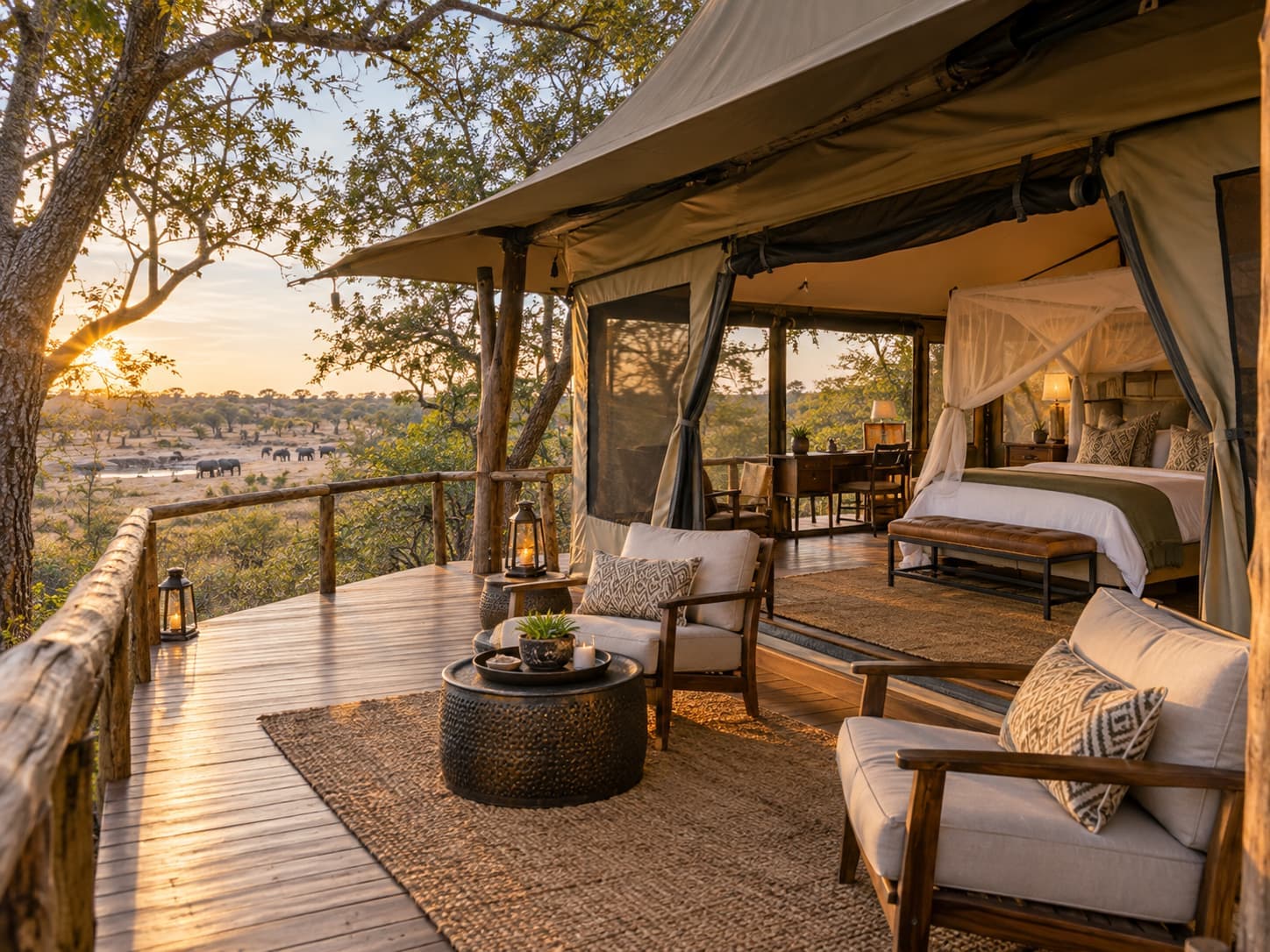
Hwange National Park – The Land of Giants
Hwange is Zimbabwe's largest national park and one of Africa's great elephant strongholds, and Timeline Travel pairs it directly with Victoria Falls on both the 11-Day and 12-Day itineraries — the same Kruger-to-Livingstone flight connects both stops, with two nights at Hwange Safari Lodge and a visit to the Painted Dog Conservation Centre worked into the stay.
Things to Do
Hwange National Park game drive
A safari drive through Hwange, known for one of Africa's largest elephant populations.
Painted Dog Conservation Centre
A visit to the conservation centre near the park, which includes a rehabilitation area for injured or orphaned dogs.
Stay at Hwange Safari Lodge
Two nights based at Hwange Safari Lodge between game drives.
Travel Information
Hwange is booked as the safari half of a Victoria Falls trip rather than as a standalone destination — Timeline Travel connects Kruger to Hwange on the same Livingstone flight, giving travellers a second safari region alongside the falls without an extra long-haul leg.
Frequently Asked Questions
Where is Hwange National Park located?
Hwange is located in northwestern Zimbabwe along the border with Botswana. It lies about 2 to 3 hours (around 200 km / 124 miles) south of Victoria Falls by road, making it very easy to combine with a visit to the Falls.
What is Hwange famous for?
Hwange is best known for its massive elephant population—home to roughly 40,000 to 50,000 elephants. It also boasts over 100 mammal species (including the Big Five and large wild dog packs) and more than 400 species of birds.
When is the best time to visit?
Dry Season (July to October): Best for wildlife viewing. Animals congregate around natural and man-made waterholes, making big cats and massive elephant herds easy to spot.
How do I get to Hwange?
By Road: Timeline Travel arranges flights into Victoria Falls International Airport (VFA) or Bulawayo, then take a 2–3-hour road transfer on the main tarred highway.
Can you see the Big Five in Hwange?
Yes: Elephants & Cape Buffalo: Extremely abundant. Lions: Frequently spotted around waterholes. Leopards: Elusive, but present. Rhinos: Extremely rare inside the main national park, but can be seen in specialized, protected sanctuaries on adjacent concessions (such as the Imvelo Ngamo Sanctuary).
Is Hwange a malaria area?
Yes, Hwange is located in a risk area for malaria. The risk is highest during the wet summer months (November through April). Consult a healthcare provider before traveling to take recommended antimalarial prophylaxis and pack bug repellent.
Is there cell service or Wi-Fi in the park?
Cell coverage is generally weak or nonexistent inside the national park. Most luxury and mid-range lodges offer Wi-Fi in common areas, though some intentionally stay off-grid.
Don't See a Tour for This Yet?
Timeline Travel can arrange a custom trip to Hwange National Park – The Land of Giants — tell us what you have in mind and we'll help turn it into a journey.